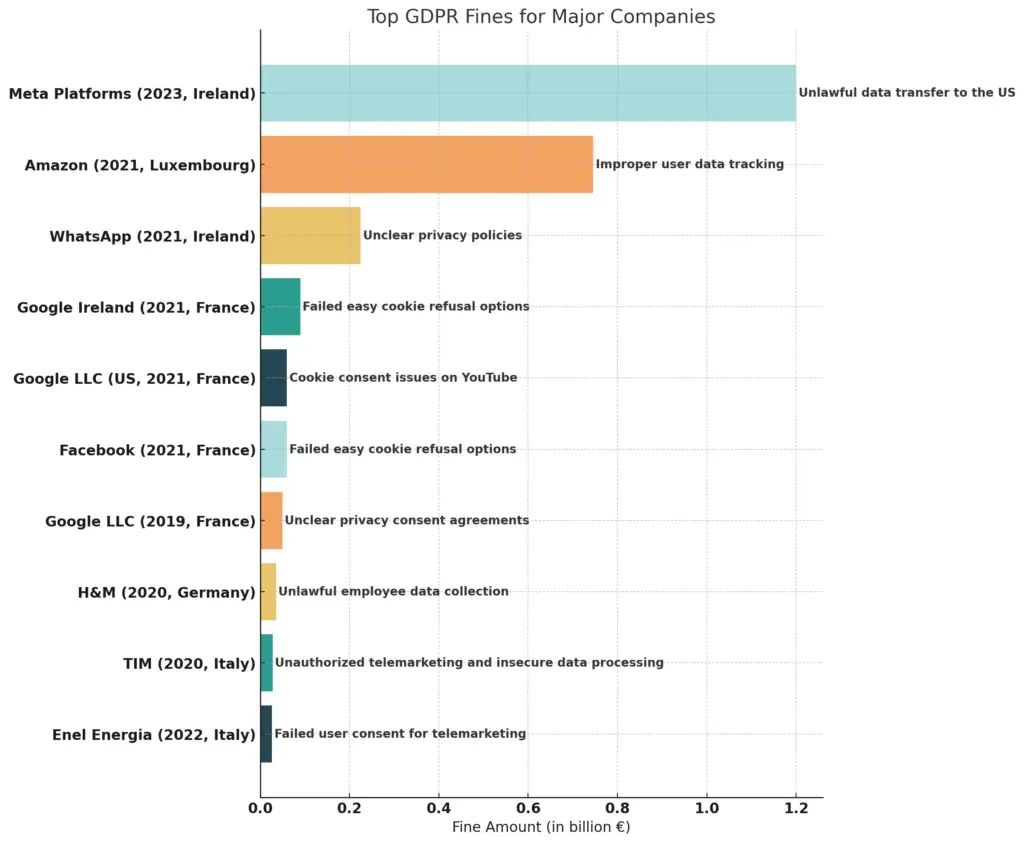
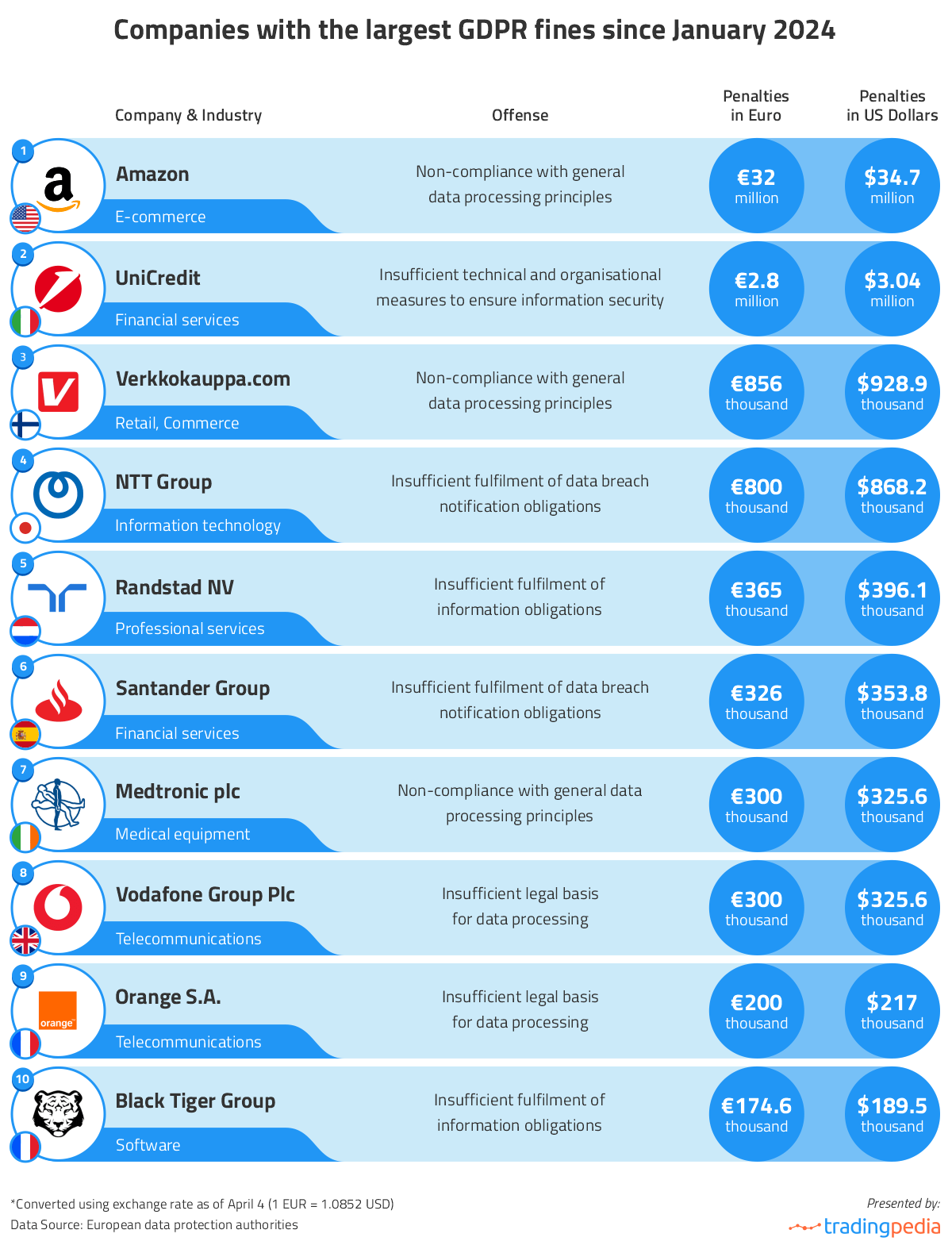
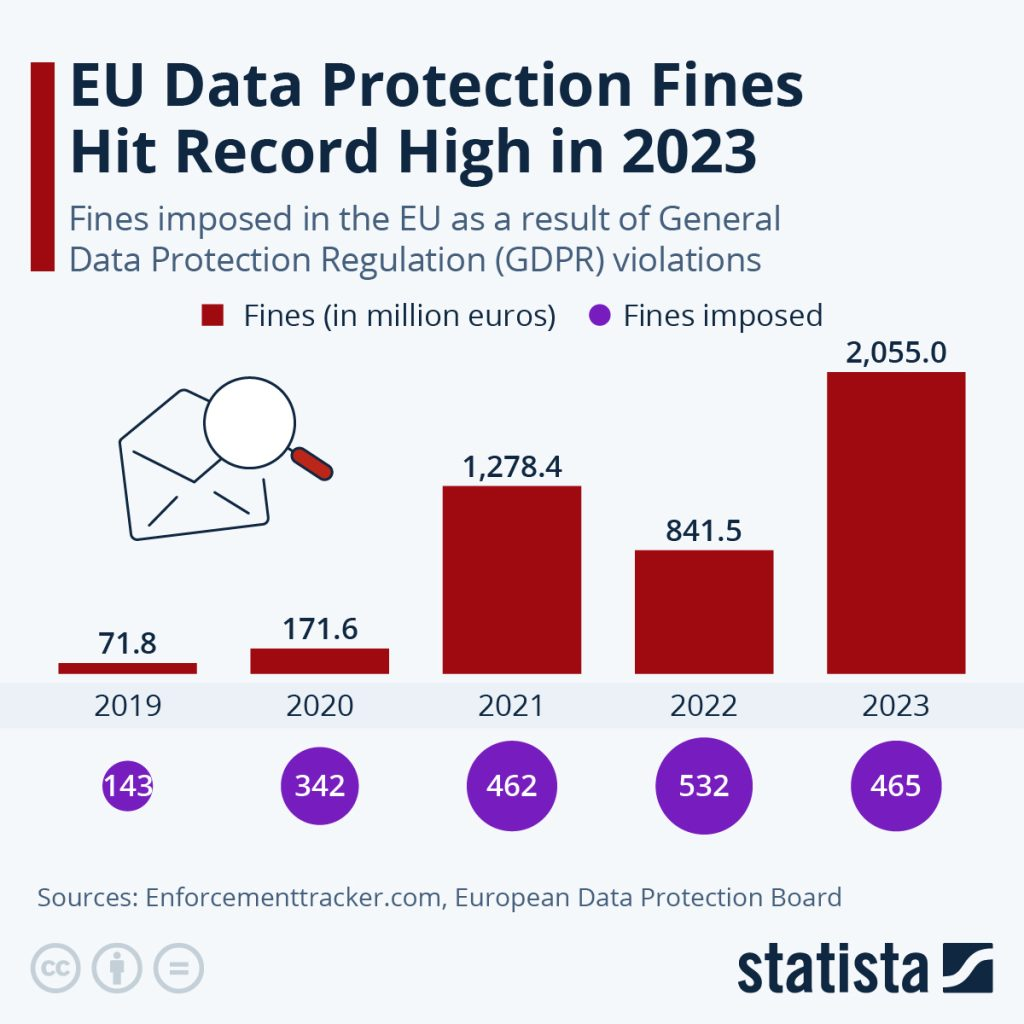
As the General Data Protection Regulation (GDPR) matures, enforcement actions continue to underscore the regulation’s wide-ranging impact. The five cases below—spanning AI-driven chatbots to streaming services and real estate—demonstrate how regulators are intensifying scrutiny on key requirements such as timely breach reporting, valid legal bases for data processing, and transparent privacy notices. Collectively, these fines serve as a reminder that both established tech giants and smaller businesses are equally subject to GDPR’s accountability standards.
1) Italy: OpenAI – €15,000,000 Fine
Key points
- Authority Involved: The Italian Data Protection Authority (Il Garante)- Violation: A data breach tied to ChatGPT was not reported within the mandatory 72-hour window under the GDPR.- Further Findings: Investigations revealed breaches of the principles of legality, transparency, and accuracy in data processing. OpenAI allegedly failed to establish a valid legal basis for training data, and the privacy notices were deemed inadequate.
Commentary The size of this fine indicates the serious stance regulators take on large-scale AI systems and their data usage. Failing to promptly disclose a breach (Article 33 GDPR) is an increasingly common pitfall. Additionally, AI developers must ensure data collection and use respect the core principles laid out in the GDPR—especially when personal data is used for model training.
2) Netherlands: Netflix – €4,750,000 Fine
Key points
- Authority Involved: Dutch Data Protection Authority (Autoriteit Persoonsgegevens)- Violation: Inadequate privacy notices between 2018 and 2020. The notices reportedly lacked crucial information such as legal grounds for data processing, intended purposes, recipients of the data, and the retention periods.- Background: The complaint was originally filed by the Austrian organization noyb.
Commentary
Transparency is a foundational requirement under the GDPR. Streaming services like Netflix process large amounts of personal data—viewing history, payment information, user profiles, etc. Regulators want to see clear justification for each type of data collected, as well as explicit information on who receives it and for how long it’s stored.
3) Ireland: Meta – €251,000,000 Fine
Key points
- Authority Involved: Irish Data Protection Commission- Violation: A security vulnerability in Facebook’s “View-As” function allowed unauthorized access to 3.3 million EU users’ profiles.- Findings: The authorities identified violations of data protection by design and default, as well as shortcomings in breach reporting under Article 33 GDPR.
Commentary Facebook’s “View-As” incident was already significant in prior enforcement actions; this ongoing scrutiny underscores the principle that large technology platforms face heightened expectations for robust data security. Meta’s repeated issues in breach handling show regulators’ diminishing patience for large-scale lapses affecting user data.
4) France: KASPR – €240,000 Fine
Key points
- Authority Involved: French Data Protection Authority (CNIL)- Violation: Unlawful collection of contact data from LinkedIn profiles without user consent. KASPR reportedly relied on “legitimate interest” while ignoring users’ privacy settings.- Additional Issue: The company failed to meet information obligations, meaning individuals were not properly informed about the processing.
Commentary This highlights how “legitimate interest” is not a blanket justification. Businesses must demonstrate that their need to process data does not override individuals’ privacy rights. Moreover, transparency obligations mean data subjects should always be informed about when, how, and why their data is being collected.
5) Sweden: Rental Company – €17,366 Fine
Key points
- Authority Involved: Swedish Data Protection Authority (Integritetsskyddsmyndigheten)- Violation: Unlawful video surveillance in a multi-family residential building. Cameras were installed in common areas without proper justification, and the tenants were not adequately informed.
Commentary Even smaller organizations must strictly adhere to GDPR requirements. Video surveillance is particularly sensitive in areas where individuals can be identified, and regulators tend to pay close attention to how, when, and where cameras are used. Proper signage, a clear privacy notice, and a demonstrated legal basis are essential.
Takeaways
- Timely Breach Reporting: Missing the 72-hour deadline under Article 33 often triggers higher fines.2. Transparent Notices: Clear, comprehensive privacy notices are paramount. Vague or missing information about data usage can lead to significant penalties.3. Lawful Basis for Processing: Whether relying on consent or legitimate interest, organizations must document and justify the data processing thoroughly.4. Privacy by Design and Default: Regulators expect robust security measures from the ground up, especially for tech giants.5. Global Accountability: GDPR enforcement affects entities of all sizes. Even comparatively small infringements—like improper camera use—can result in fines if the rules are not followed.
GDPR enforcement is a moving target, with regulators focusing on the twin goals of promoting accountability and protecting individual rights. These five cases—from AI-based chatbots to social media giants and local rental companies—reinforce that compliance requires vigilance, sound data governance, and transparency at every level.
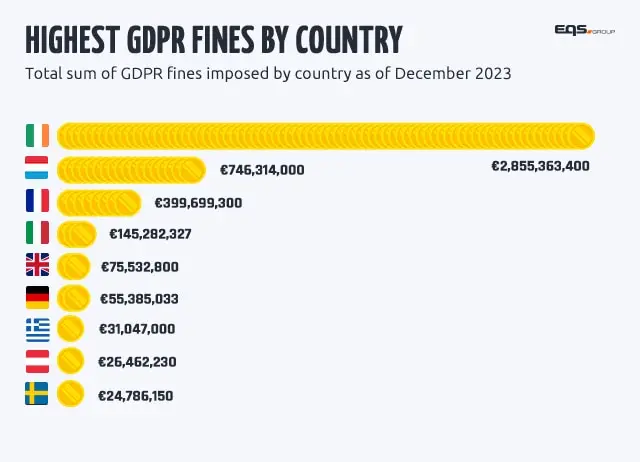 Whether it involves unreported security breaches, incomplete privacy disclosures, or invasive surveillance practices, these enforcement actions highlight the consequences of non-compliance with GDPR mandates. As the data protection landscape evolves, organizations must adopt a proactive stance—investing in sound governance, robust security measures, and continual staff training. Ultimately, a strong commitment to protecting personal data not only reduces the risk of costly fines but also reinforces trust and fosters long-term relationships with customers and stakeholders.
Five additional real-life GDPR enforcement cases from 2024
1) Netherlands: Clearview AI – €30.5 Million Fine
Key points
- Authority Involved: Dutch Data Protection Authority (AP)- Violation: Created a biometric database of 30+ billion facial images scraped from public websites without consent or legal basis, violating GDPR transparency and data minimization principles[1][4].- Additional Findings: Failed to respond to data access requests and marketed services to EU law enforcement despite lacking a GDPR-compliant operational base in Europe[1][4].
Commentary This case mirrors KASPR’s unlawful data collection but at industrial scale, emphasizing the GDPR’s strict stance on biometric data. Regulators highlighted the incompatibility of mass facial recognition systems with EU privacy values[1][4].
2) Czech Republic: Avast – €13.9 Million Fine
Key points
- Authority Involved: Czech Office for Personal Data Protection (ÚOOÚ)- Violation: Transferred 100 million users’ browsing data to subsidiary Jumpshot while falsely claiming full anonymization, enabling third-party advertising insights[1][9].- Technical Failure: Re-identification risks through combined datasets exposed users’ identities, interests, and sensitive behaviors[1].
Commentary Similar to Meta’s security failures, this demonstrates how technical claims about anonymization require rigorous validation. A cybersecurity firm’s data misuse amplified regulators’ concerns about insider threats[1][9].
3) Italy: Enel Energia – €79.1 Million Fine
Key points
- Authority Involved: Italian Garante- Violation: Systematic processing of customer data without valid legal basis, including improper consent mechanisms and failure to document processing activities[1][14].- Scale: Affected millions of energy customers through aggressive marketing practices[14].
Commentary This energy sector penalty echoes OpenAI’s legal basis failures but within traditional industry, showing GDPR’s cross-sector reach. The fine reflects cumulative violations over time rather than a single breach[14].
4) Spain: The Phone House – €6.5 Million Fine
Key points
- Authority Involved: Spanish Data Protection Agency (AEPD)- Violation: Used deceptive UX design to trick customers into consenting to data sharing with third-party advertisers during phone purchases[11].- Dark Pattern: Pre-ticked boxes and confusing opt-out mechanisms violated GDPR’s “freely given” consent requirement[11].
Commentary This retail case complements Netflix’s transparency failures by showing how interface design can subvert consent. Regulators are increasingly scrutinizing digital “dark patterns” across industries[11].
5) Ireland: LinkedIn – €310 Million Fine
Key points
- Authority Involved: Irish Data Protection Commission- Violation: Processed user data for behavioral advertising using invalid legal bases (consent/legitimate interest), while hiding processing purposes in privacy notices[1][4][8].- Systemic Issue: Affected all EU users through platform-wide advertising practices spanning multiple GDPR articles[1].
Commentary As the year’s largest fine, this reinforces Meta’s lesson about systemic security failures in tech giants. The penalty specifically targeted LinkedIn’s business model reliance on non-compliant data practices[1][8].
Expanded Takeaways
- Biometric Sensitivity: Facial recognition systems face heightened scrutiny (Clearview AI)[1][4]2. Anonymization Claims: Must withstand technical audits (Avast)[1][9]3. Sector Agnosticism: Traditional industries face equal scrutiny (Enel Energia)[14]4. UX Accountability: Interface design impacts legal compliance (The Phone House)[11]5. Ad-Tech Models: Require fundamental GDPR alignment (LinkedIn)[1][8]
These cases collectively demonstrate regulators’ evolving focus on technical implementation details, cross-sector enforcement, and systemic business model compliance – moving beyond individual breaches to scrutinize organizational data governance holistically.
Citations: [1] https://www.skillcast.com/blog/biggest-gdpr-fines-2024 [2] https://truyo.com/gdpr-fines-in-2024-a-year-of-significant-penalties-and-trends/ [3] https://privacy108.com.au/insights/biggest-gdpr-fines-in-2024/ [4] https://www.infosecurity-magazine.com/news/gdpr-fines-total-2024/ [5] https://termly.io/resources/articles/biggest-gdpr-fines/ [6] https://www.edpb.europa.eu/our-work-tools/our-documents/topic/gdpr-enforcement_en [7] https://www.enforcementtracker.com [8] https://2b-advice.com/en/2024/11/02/the-five-highest-dsgvo-fines-in-october-2024/ [9] https://www.infosecurity-magazine.com/news-features/top-10-data-fines-settlements/ [10] https://gdpr-info.eu/issues/fines-penalties/ [11] https://2b-advice.com/en/2024/12/06/these-are-the-five-highest-dsgvo-fines-in-november-2024/ [12] https://www.dataguidance.com/resource/gdpr-enforcement-q3-2024 [13] https://www.infosecurityeurope.com/en-gb/blog/regulation-and-policy/top-data-protection-fines-settlements.html [14] https://dataprivacymanager.net/5-biggest-gdpr-fines-so-far-2020/ [15] https://www.digit.fyi/big-tech-in-the-firing-line-as-gdpr-fines-hit-e1-2bn-in-2024/ [16] https://www.dlapiper.com/en-us/insights/publications/2025/01/dla-piper-gdpr-fines-and-data-breach-survey-january-2025 [17] https://www.statista.com/statistics/1133337/largest-fines-issued-gdpr/ [18] https://www.iubenda.com/en/help/111204-the-biggest-gdpr-fines-to-date [19] https://cms.law/en/int/publication/gdpr-enforcement-tracker-report/numbers-and-figures [20] https://www.csoonline.com/article/3808871/gdpr-fines-reduced-in-2024.html